Menu

Get It Safely Pumped Today
Get It Safely Pumped Today
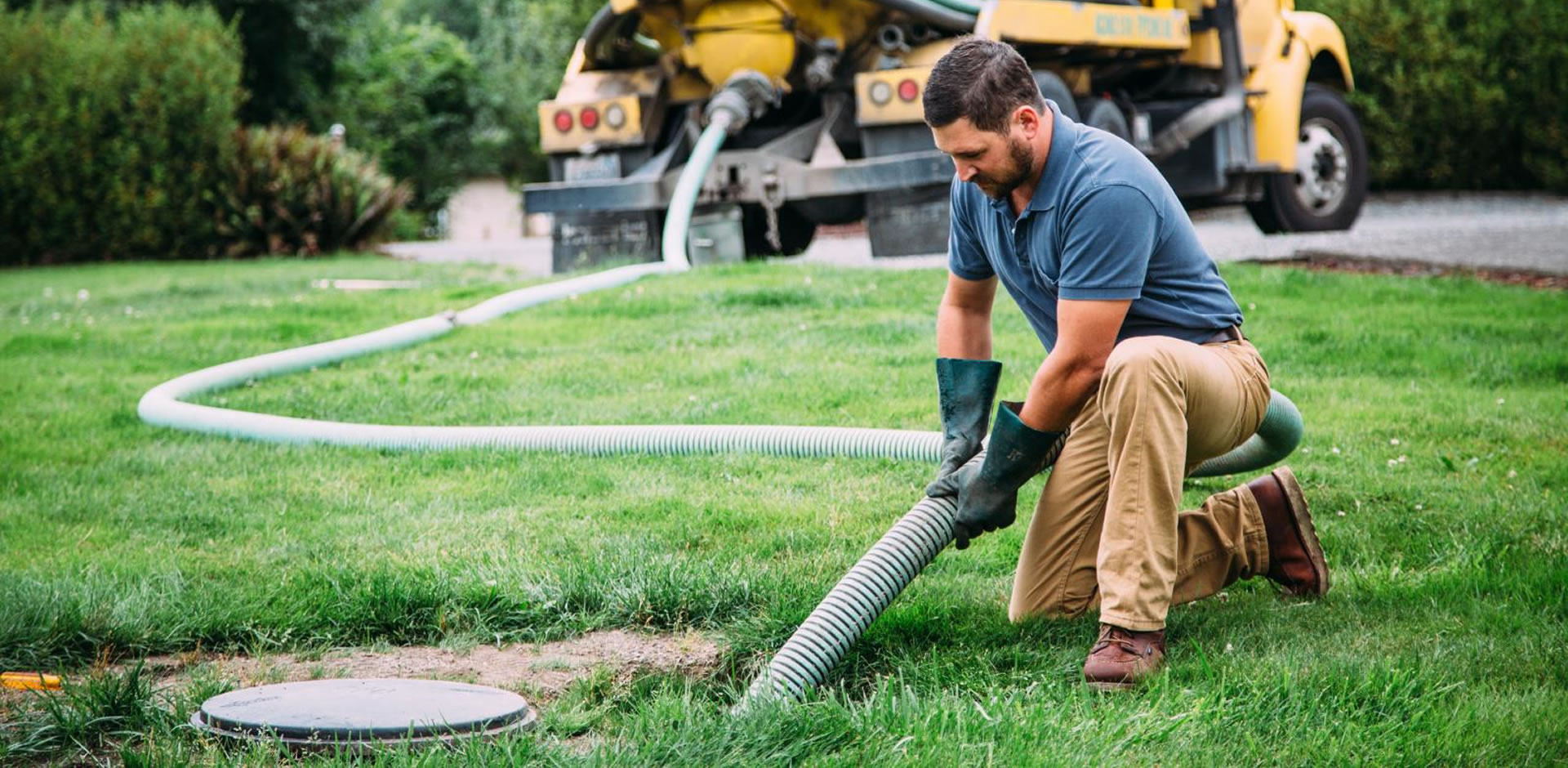
Scheduling a septic maintenance appointment is something homeowners know they should do, but often put off because they're not sure what it involves. At Septic Pumping of Raleigh, we think an informed customer is a better customer, so here's a simple breakdown of what happens during a septic service appointment and why each step matters for the long-term health of your system.
Before the lid comes off, the technician does a walkthrough of your property. They'll locate the tank's access points, check for signs of surface pooling or wet spots near the drain field, and ask you a few questions about your household size, water usage, and when the tank was last serviced. The conversation helps the technician gauge how full the tank is likely to be and if there's reason to expect anything unusual.
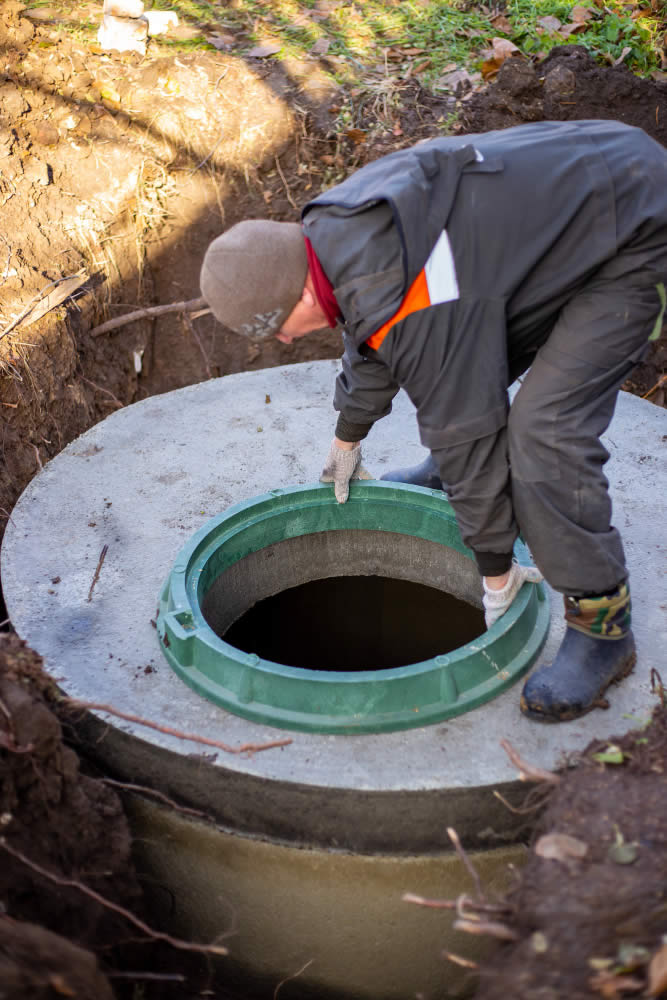
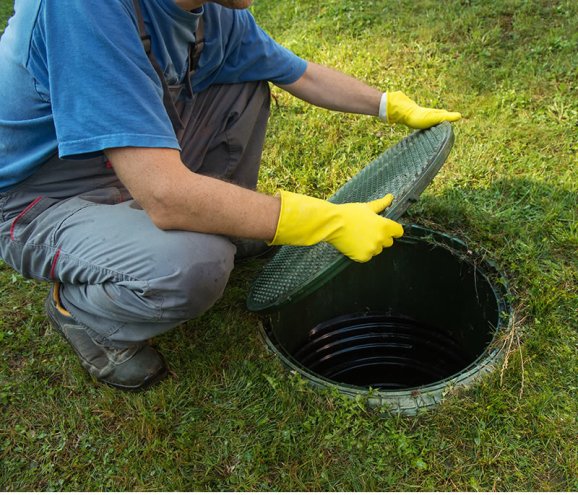
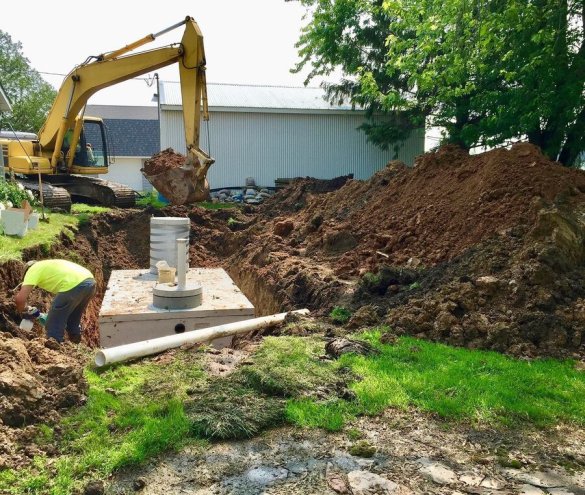
If the tank's access risers aren't already at ground level, the technician will need to dig to expose the lids. Some older systems have lids buried a foot or more underground. That adds time, and it's one reason many homeowners choose to install risers after their first septic service, so future appointments go faster.
The technician also notes the condition of the ground around the tank before touching anything. Saturated soil, odors at the surface, or visible sewage backup are all indicators that something beyond routine septic tank pumping may be needed.
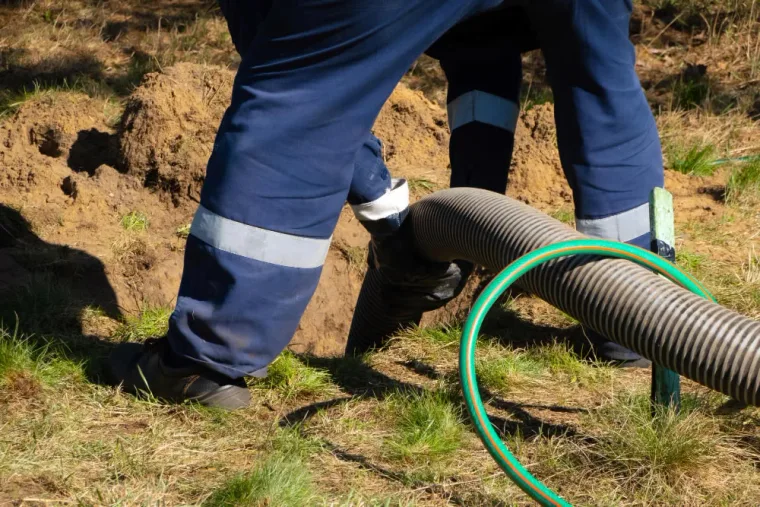
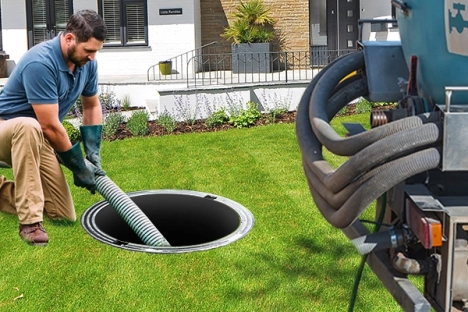
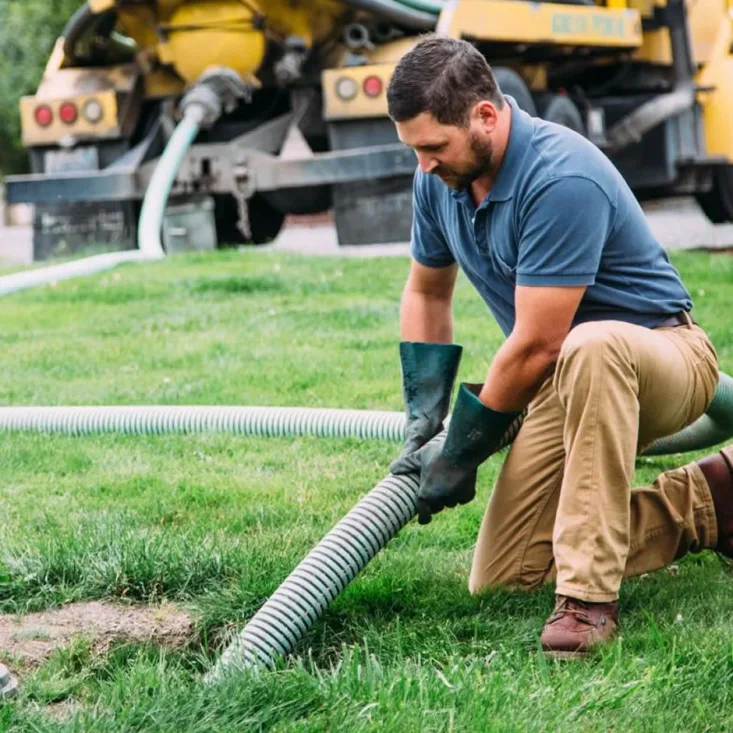
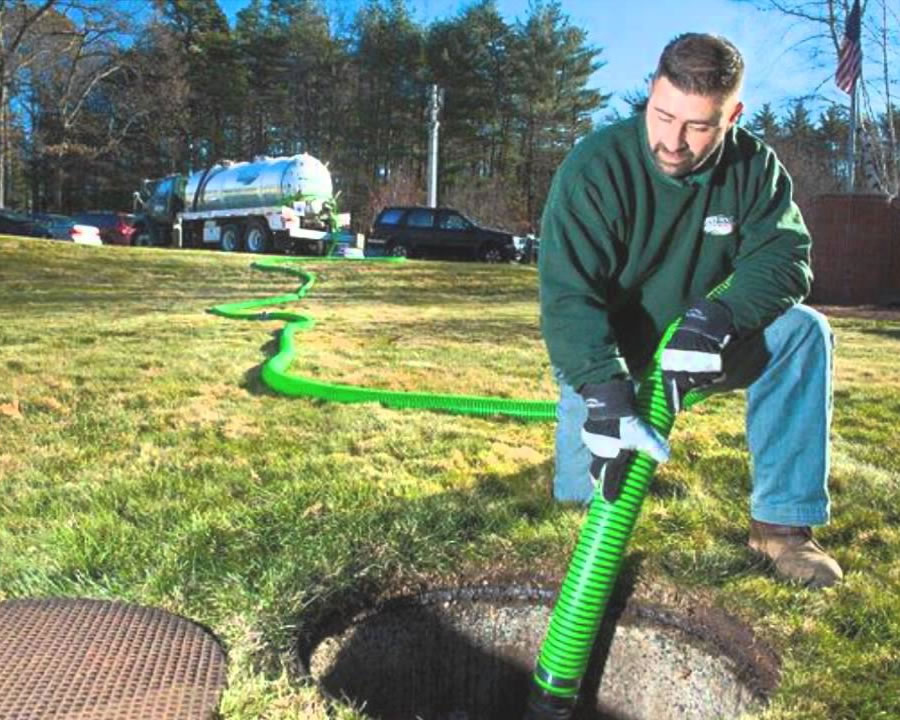
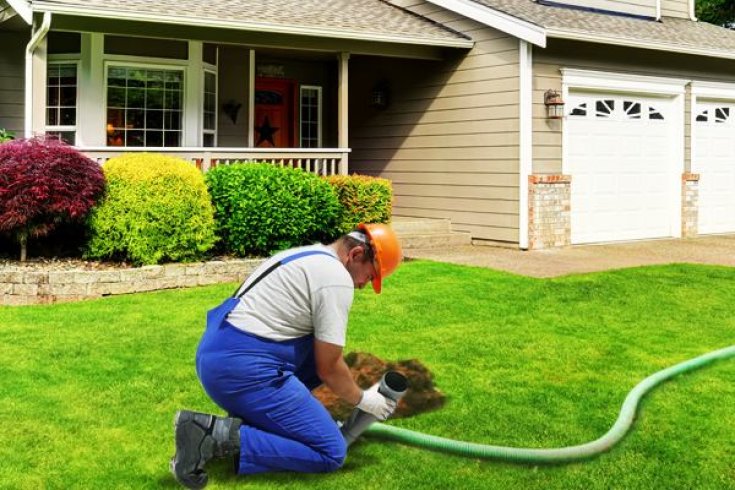
Once the tank is uncovered, the technician connects a large vacuum hose from the service truck to the tank's access port. The truck's pump creates suction that pulls the liquid and solid waste up through the hose and into the truck's holding tank. A standard residential tank holds between 1,000 and 1,500 gallons, and the pumping process takes 20 to 30 minutes, depending on how full the tank is and how thick the sludge layer has become.
The technician doesn't just vacuum blindly. They work the hose through the tank to break up the scum layer at the top and pull sludge from the bottom. This takes some back-and-forth movement to get as much material out as possible. Leaving large amounts of solids behind defeats the purpose of septic tank pumping and shortens the interval before the next appointment.
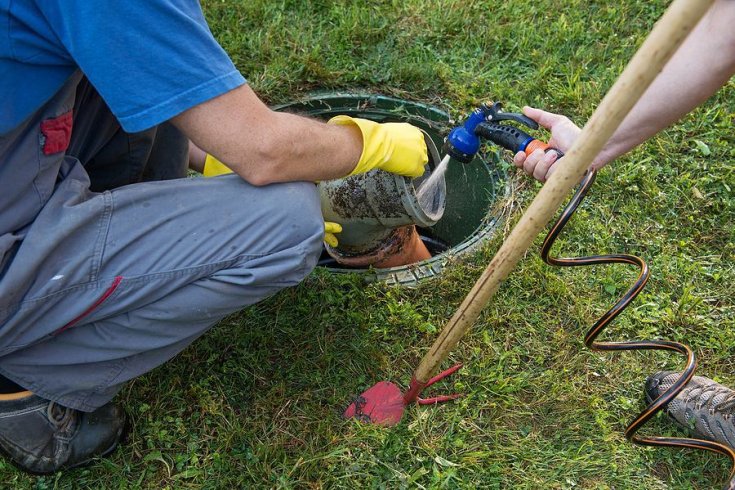
After the waste is removed, the technician may rinse the tank walls with water and suction it out again. This step clears residue that clings to the sides and gives a cleaner view of the interior for inspection. The waste collected by the truck goes to a licensed treatment facility for proper disposal.
Pumping removes the liquid waste and a large portion of the solids, but some residue and sludge remain on the walls and corners of the tank. A full septic cleaning goes further. The technician rinses every interior surface, breaks up compacted sludge deposits, and vacuums the tank until it's as close to empty as equipment allows.
Full septic cleaning is recommended when a tank hasn't been serviced in many years, when heavy buildup has reduced the tank's working capacity, or when a technician spots evidence that solids are reaching the outlet baffle. Routine pumping every three to five years handles most households well, but some situations call for a more thorough cleaning.
A reputable septic company will tell you which service your system needs. If your tank is on a regular maintenance schedule and the sludge and scum layers are within normal range, standard pumping is probably sufficient. If the tank hasn't been touched in almost a decade, a full cleaning is worth the extra investment.
An open tank is a diagnostic opportunity, and a thorough technician uses it. With the waste removed, they can visually inspect the inlet and outlet baffles, check for cracks or structural damage to the tank walls, and determine the condition of filters attached to the outlet. Baffles direct the flow of waste inside the tank and prevent solids from reaching the drain field. A cracked or missing baffle needs replacement before it causes a larger problem.
The technician also looks at the liquid level inside the tank relative to the outlet pipe. A tank that's draining too slowly, or one where liquid sits above the outlet, may point to a drain field that's losing absorption capacity. That's not something pumping alone will fix, but identifying it during a septic maintenance appointment gives you a chance to take care of it before the system backs up into the house.
Inspecting the tank's access lids and risers is part of the process, too. Cracked lids or risers that have shifted allow groundwater or surface water to enter the tank, which throws off the bacterial balance and increases how quickly the tank fills.
When the technician wraps up, they should give you a clear summary of what they found. That includes the sludge and scum measurements taken before pumping, structural observations, and recommendations for repairs or adjusted service intervals. A written report or service record is standard with a reputable septic company. Keep your documentation. It's useful for tracking your system's history and for disclosing to buyers if you sell your home.
Your drains and toilets should work normally immediately after pumping. If you notice slow drains or gurgling sounds within a day or two of service, call your septic company back. That can indicate a problem with the drain field or a baffle that wasn't functioning correctly before the appointment.
Septic Pumping of Raleigh can provide every step of this process with the attention it deserves. Whether your tank is due for routine septic tank pumping or needs a full septic cleaning after years without service, our technicians give you an honest assessment and do the work right. Call us to schedule your appointment and find out exactly what your system needs.
 22
May/22/2026
22
May/22/2026
There is a similarity between emergency septic back-ups and costly repairs – the red flags were neglected! Most times, homeowners appear…
 12
May/12/2026
12
May/12/2026
Most homeowners know they are supposed to schedule septic tank pumping every few years. What many do…
 06
May/06/2026
06
May/06/2026
Septic systems do not malfunction suddenly! The failure starts with ordinary habits that seem harmless at the time. A little grease…
 30
Apr/30/2026
30
Apr/30/2026
Septic systems take a beating from the seasons, and most homeowners have no idea it's happening until there's already a problem.…